All documents on this site are copyrighted material unless otherwise labeled.
Permission is specifically granted to view, print and distribute these documents at no cost as long as they are not modified in any way.
If you wish to add any document to another web site, you must provide a link to our site instead ( https://backyardhabitat.info ). We periodically update the information as we learn more, and we want you to have the best information on hand.
A brief overview by noted author and researcher Douglas Tallamy, published in the Wild Ones Journal, Volume 22, No. 2..
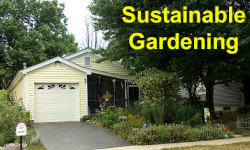
Want to see local proof of the value gardening for wildlife can bring? This yard has been the subject of two research studies measuring the changes observed during the transition from traditional lawn & flowerbeds to native plants and chemical free gardening practices. This is a typical residential property on a 50′ x 100′ lot.
The first study tracks wildlife diversity in our yard over a 6-year time span, and shows that wildlife diversity correlates directly to the diversity of chemical free native plant species.
The second study compares our habitat yard with an adjacent “typical” yard where chemical fertilizers and pesticides are used, non-native and cultivar plants are the norm, and traditional landscaping practices are followed (including low mower height). This study currently covers a 2-year time span and documents major differences between the adjoining properties.
Here are specific recommendations drawn from the study results which should be implemented widely by property owners, government officials, schools, farmers and landscape professionals.