
IS YOUR YARD GREEN?
Toni Stahl, Volunteer
National Wildlife Federation
Problem
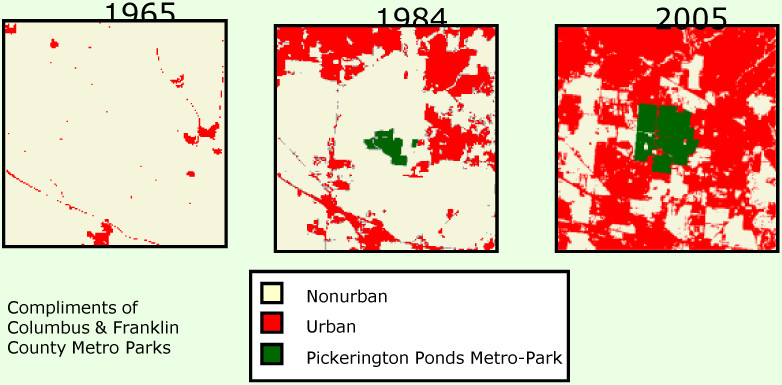
Urban Sprawl Is Rapid
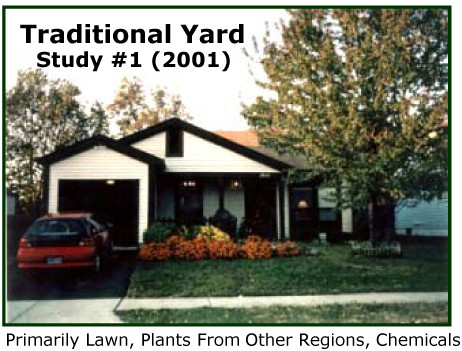
Traditional Yards Harm The Environment
- 40 million acres of traditional yards in the United States
- Lawn is the largest irrigated crop in the US
- Chemicals in 2001 per EPA
- 101 million pounds of Pesticides applied to home lawns annually
- Lawn averages 10 times more Fertilizers & Pesticides than Agriculture uses for equivalent area
- 800 million gallons of gasoline burned every week mowing lawns
Importance
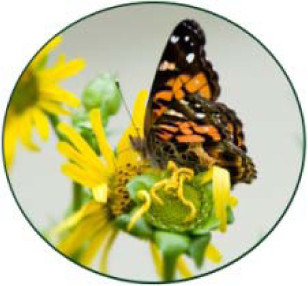
Nature Is The
Window To Our
Environmental
Health
Results
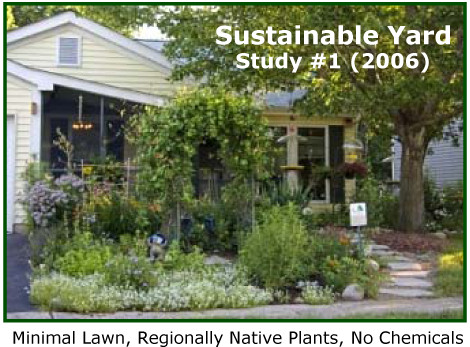
Case Study #1
Transition from Traditional to Sustainable (2001-2006)
Number of different species observed in the same yard each year as native plant species were added

Case Study #2
Traditional vs. Sustainable Yards (2005-2006)
Different species observed in adjacent yards during equivalent periods
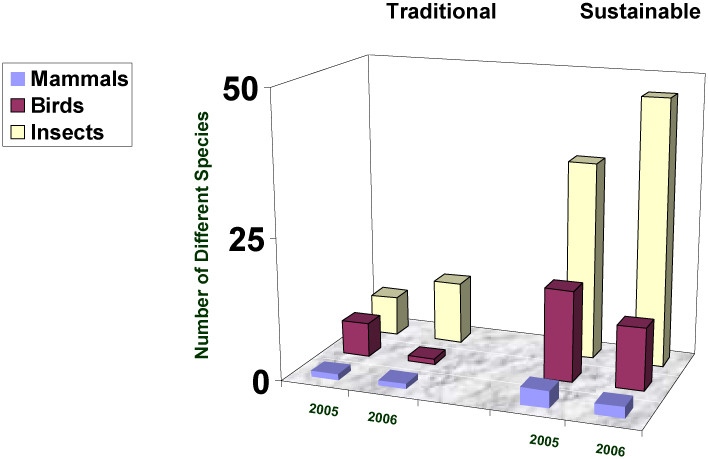
Additional Results: Study #2
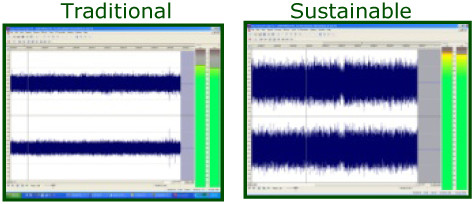
2007 Night Sounds Measurement
Traditional Yard ~Half as Loud as Sustainable Yard
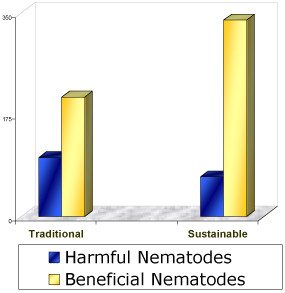
Nematodes Indicate Soil Health
2006 Count Traditional vs. Sustainable
Conclusions
Recommendations To Improve Our Environmental Health
Homeowners
- Reduce lawn area
- Remove Invasive plants
- Add diverse native plants
- Reduce chemical use
Governments
- Promote ‘Green Space’
- Develop programs to curb ‘Urban Sprawl’
- Update weed laws
- Educate the general public
School Officials
- Add ‘sustainable yard care’ to curriculum
Plant Nurseries
- Discontinue selling Invasive plants
- Sell native plants